
Top 5 Ports in South America: Key Trade Hubs to Know
Discover 5 key South American ports shaping global trade, from Santos and Cartagena to Callao, Paranaguá, and Guayaquil.

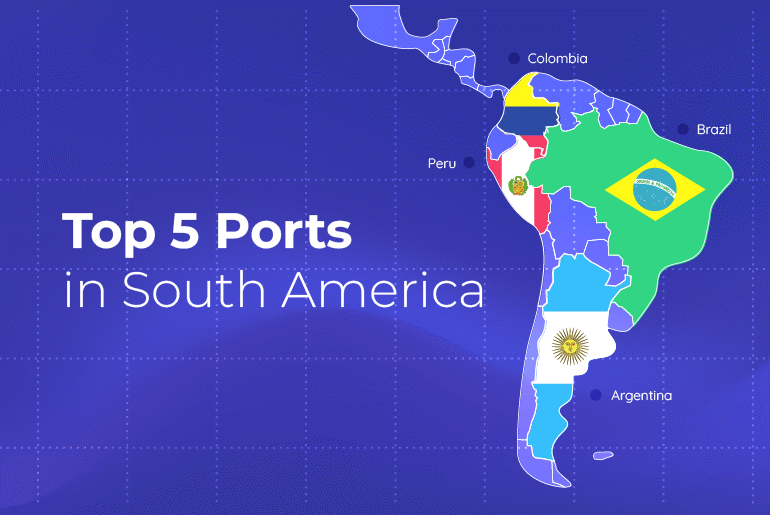
South America’s major ports play an important role in connecting the region with Asia, Europe, North America, and other global markets. In this article, we highlight five important ports based on container activity, trade importance, and strategic location.
Quick Overview
South America is home to several major ports supporting the movement of containers, agricultural products, minerals, energy, and manufactured goods. These ports also connect regional economies with major international shipping routes.
Here are five important ports to know when looking at South America’s shipping and logistics network in 2026.
1. Port of Santos – Brazil
The Port of Santos is the largest container port in South America and one of Brazil’s most important trade gateways. Located near São Paulo, Brazil’s largest economic center, it handles a wide range of imports and exports.
In 2025, Santos handled more than 5.9 million TEUs, while total cargo movement reached a record 186.4 million tonnes. The port plays a particularly important role in Brazil’s agricultural exports, including soybeans, sugar, and coffee.
Key strength: Brazil’s main international container gateway.
2. Port of Cartagena – Colombia
Located on Colombia’s Caribbean coast, Cartagena is a major container and transshipment hub. Its strategic position connects South America, North America, Europe, and the Caribbean.
The Cartagena port zone handled around 4.04 million TEUs in 2025, representing approximately 65% of Colombia’s total container movement.
Key strength: Caribbean connectivity and transshipment.
3. Port of Callao – Peru
Port of Callao is Peru’s principal maritime gateway and one of the most important ports on South America’s Pacific coast. It handles containerized imports and exports and provides an important connection between South America and Asian markets.
The port handled approximately 3.3 million TEUs in 2025, with DP World and APM Terminals contributing to the total.
Key strength: Pacific trade and connectivity to Asia.
4. Port of Paranaguá – Brazil
Paranaguá is one of Brazil’s key ports for agricultural and containerized exports. Located in southern Brazil, it serves major producing regions and supports international trade in food, refrigerated cargo, and manufactured products.
Its container terminal, TCP, handled approximately 1.66 million TEUs in 2025, setting a new annual record.
Key strength: agricultural exports and connectivity to Southern Brazil.
5. Port of Guayaquil – Ecuador
Guayaquil is Ecuador’s traditional commercial gateway and an important port for the country’s international trade. It handles containerized cargo and major exports such as bananas, seafood, and other agricultural products.
The port area includes several important terminals and remains a key part of Ecuador’s shipping network. At the same time, the growing importance of nearby deep-water facilities such as Posorja is reshaping Ecuador’s maritime landscape.
Key strength: Ecuadorian exports and regional trade.
Why Are South American Ports Important?
South America’s ports support a wide range of global supply chains. Agricultural exports from Brazil, Colombia, Peru, and Ecuador rely heavily on maritime connections, while containerized imports connect local markets with manufacturing centers in Asia, Europe, and North America.
The region is also experiencing changes in port infrastructure, capacity, and shipping connectivity. For logistics professionals, understanding these developments can improve visibility into routes and potential delays.
Explore More South American Ports
The five ports above are key gateways in South America, but the region’s shipping network extends far beyond these major hubs.
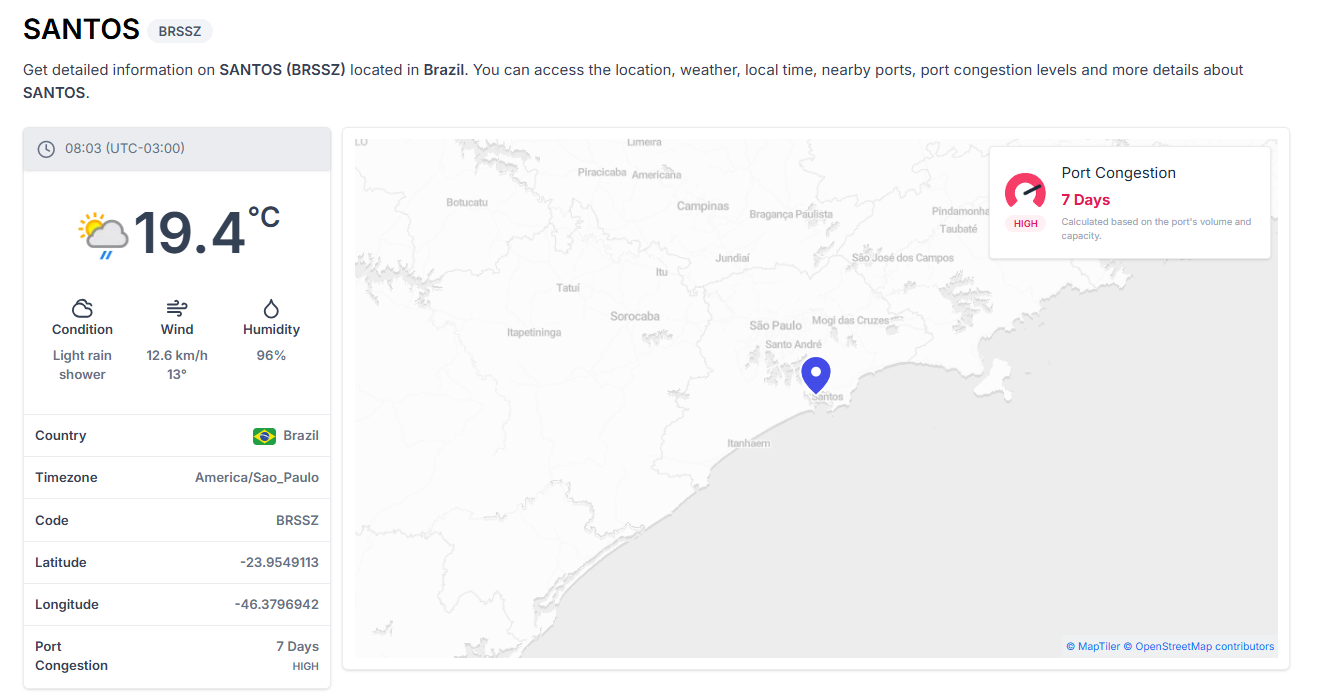
If you want to explore more ports across the region, the ShipsGo Ocean Ports directory lets you browse ports by country, access detailed information for individual locations, and check port congestion to better understand current conditions at major gateways.
Explore South American ports with ShipsGo
Track Shipments Moving Through South American Ports
Knowing which port a shipment is moving through is only one part of effective shipment management. Logistics teams also need visibility into vessel movements, estimated arrival times, and shipment milestones.
ShipsGo helps freight forwarders, importers, and exporters track container shipments across global shipping routes. With shipment visibility from origin to destination, logistics teams can stay informed about important changes throughout the journey.
Whether a shipment is moving through Santos, Cartagena, Callao, Paranaguá, or another global gateway, reliable tracking helps logistics teams maintain better visibility and respond to potential delays.
Track your container with ShipsGo and stay informed throughout your shipment journey.

Real-Time Shipment Tracking
Frequently Asked Questions
What is the largest port in South America?
The Port of Santos in Brazil is the largest major container port in South America. It handled more than 5.9 million TEUs in 2025.
What are the main ports in South America?
Some of the region’s most important ports include Santos, Cartagena, Callao, Paranaguá, and Guayaquil.
Which South American ports are important for Asia trade?
Callao, Santos, Cartagena, and Paranaguá all provide important connections between South American markets and global shipping networks, including routes to Asia.
How can I track a container moving through a South American port?
You can use a container tracking platform such as ShipsGo to monitor container movements, vessel information, estimated arrival times, and available shipment milestones.